Choosing the right tool ultimately depends on one key factor: How many people will be using it?
Quick answer: There are three main types of project management software by team scale — individual (solo task tracking), collaborative (small-team shared visibility), and integrated (full-company coordination across tasks, docs, chat, and reporting).
What Are the Main Types of Project Management Software by Team Scale?
There are three main types of project management software by team scale: individual, collaborative, and integrated — and the right one depends entirely on how many people need to coordinate inside it. Before comparing feaures or prices, ask that one question first. The answer points you straight to a category.
Individual Project Management Software
Individual project management software is built for one person to track their own tasks and deadlines — not a team. There are no shared dashboards, no team permissions, and no dependency tracking between colleagues.
It works well for freelancers, consultants, or solo operators. It breaks down the moment a second person needs visibility into the same work.
Collaborative Project Management Software
Collaborative project management software lets a small team plan, assign, and track work together, so everyone can see who owns what and when it’s due. It typically covers one or two active projects at a time within a single team.
This type suits a single department running focused work. It starts to strain once a business has several departments generating their own tasks, files, and updates that need to connect.
Integrated Project Management Software
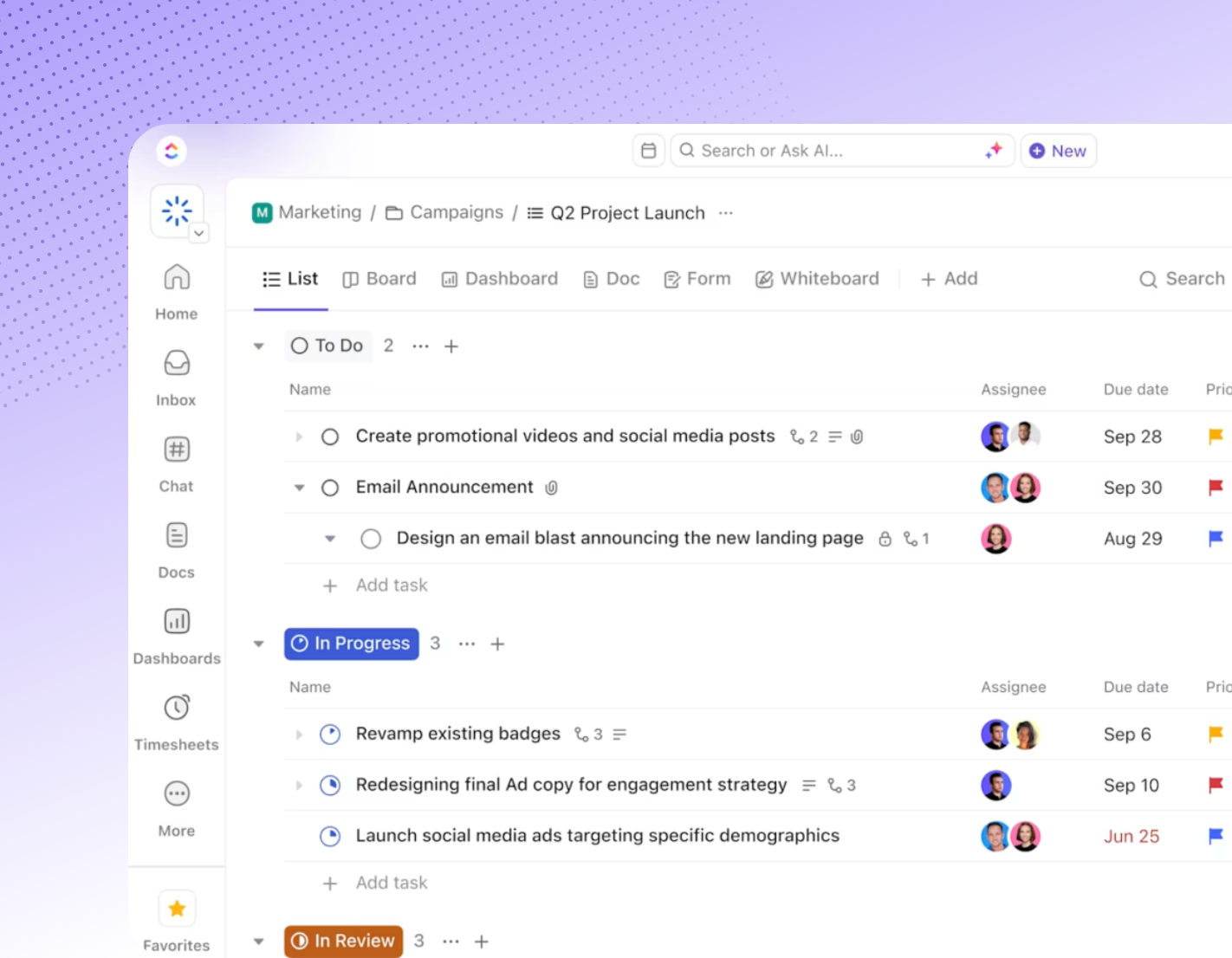
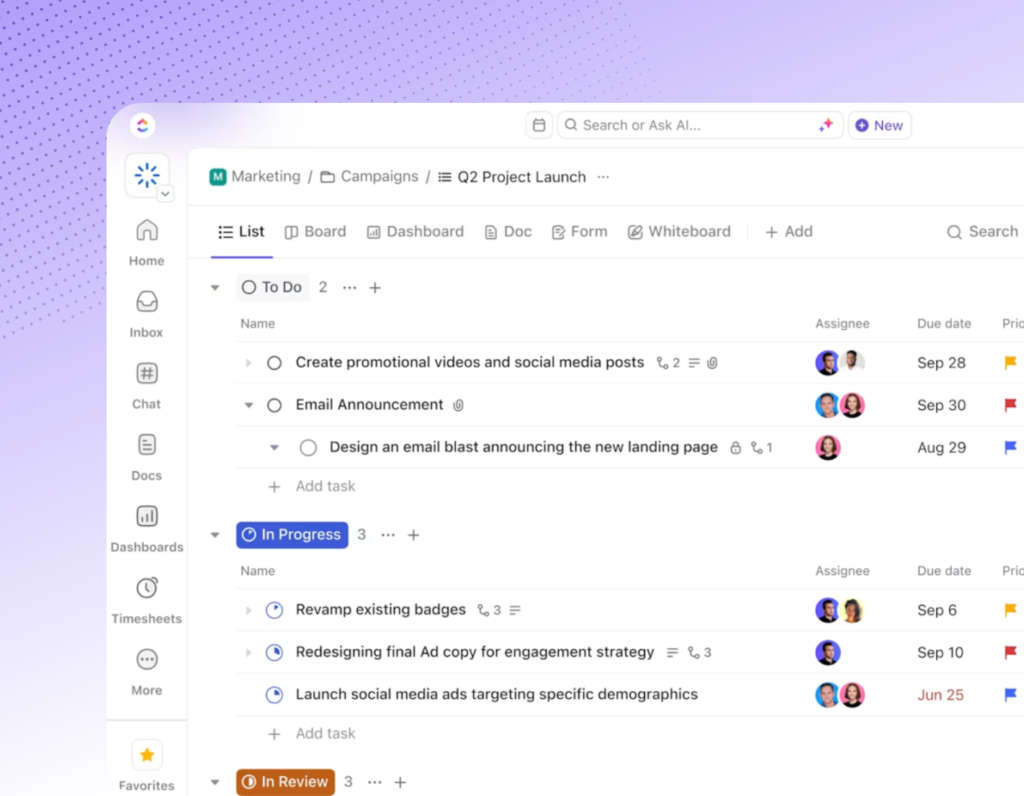
Integrated project management software brings project tracking, documents, chat, dashboards, time tracking, and AI into one workspace, replacing five or six separate apps with a single source of truth. This is the category built for a growing company, not a single team or person.
This is where a platform like ClickUp sits. It’s built for organisations that have outgrown collaborative tools and now need one workspace that scales across teams, departments, and regions — which is exactly the category Dtech Systems specialises in.
How To Choose the Right Type of Project Management Software
Choosing the right type of project management software comes down to five steps: identify who the tool is for, count your current tool sprawl, layer on methodology and deployment needs, verify the AI is genuinely native, and pilot it on real work before committing. Here’s how each step works in practice.
1. Decide who the tool is really for. A platform bought only to satisfy leadership reporting will get ignored by the people doing the daily work—and the reverse is also true. Talk to the people who’ll open the tool every morning before you talk to a vendor.
2. Count your current tool sprawl. If your team already juggles three or more apps to move one project from start to finish — tasks in one place, files in another, chat somewhere else — you’ve outgrown collaborative software and need an integrated platform.
3. Layer on methodology and deployment. Once you know your category, narrow the shortlist by how your team works (Agile, Waterfall, or hybrid) and where your data legally needs to live.
4. Check whether the AI is real. AI that only autocompletes text isn’t the same as AI that reads your actual tasks, docs, and history and can answer real questions about your projects. Ask specifically how the AI is grounded in your workspace, not the public internet.
5. Pilot it on real work, not a demo. A vendor demo is designed to look flawless. A 30-day pilot on a live project—with real deadlines and real people—is the only test that reveals whether the tool fits.
This is precisely where most rollouts break down. Picking the right type of project management software is only step one—getting your team to actually use it daily is the harder part, and it’s the part Dtech Systems is built around.
How to Keep Your Project Management Software Working as You Scale
Project management software keeps working as you scale when you review fit quarterly, protect the daily-user view, standardise only the essentials, and plan your next layer (like portfolio reporting) before you actually need it. Choosing well once isn’t enough — these four habits are what separate teams that keep one platform for years from teams that replace software every 18 months.
- Review fit every quarter. Ask whether the team still opens the tool daily or whether people have quietly drifted back to WhatsApp and spreadsheets.
- Protect the daily-user view. If someone doing the actual work can’t see their tasks for today in under five seconds, the tool has become too cluttered with manager-only dashboards.
- Standardize only the essentials. Agree on what “Done” means and how projects are named—then let individual teams own the rest of their workflow.
- Plan for the next stage early. Integrated platforms handle a few hundred people well. Past that, most organizations add a portfolio reporting layer on top rather than switching tools entirely.
This scaling challenge is exactly what Dtech Systems’ four-stage engagement — consulting, implementation, adoption, and ongoing support — is designed to solve, so a workspace that works on day one.
Frequently Asked Questions (FAQs)