Key Takeaways
- Support agents play a vital role in bridging the gap between businesses and their customers.
- A well-organized Inbox and powerful filters help agents start their day with clarity and focus.
- Ticket sorting is streamlined through categories, tags, and smart routing, before a human even steps in.
- Seamless, context-rich customer conversations are powered by Intercom Messenger and AI tools.
- Internal collaboration tools like mentions and team assignment features keep support efforts aligned.
- Automations reduce manual work, letting agents focus on the interactions that matter most.
- Built-in analytics and performance metrics help agents continuously improve and spot areas for growth.
- Small daily habits like time-blocking, trend reviews, and proactive personalization separate good agents from great ones.
- With the right tools, support teams can become efficient, scalable, and truly customer-first.
A Day in the Life of a Support Agent
A typical day in support working with Intercom looks like this:
Starting the Day with the Inbox
Everyone dreads Mondays: it’s the day when you grudgingly return to work and reorganize your tasks.
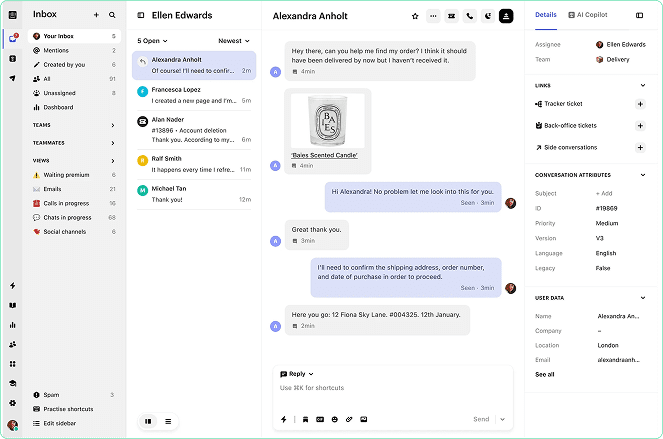
With Intercom, your day starts in the Inbox, where everything you need is just a click away. No need to jump tabs; your conversations, tools, and customer data are all in one place.
You can prioritize conversations using filters and tags, while the sidebar provides quick access to customer history and recent activity.
Even better? You have an AI assistant to help you navigate the chaos and craft quick but precise responses.
Sorting Work through Tickets
When tickets come pouring in, especially at a larger company that’s active across multiple platforms, keeping track becomes a challenge.
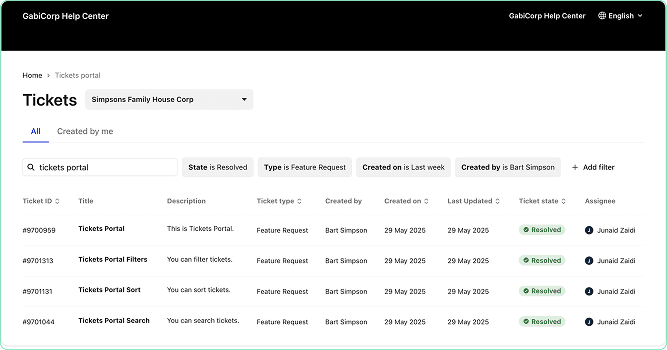
Intercom’s many categorization features allow you to sort tickets by severity, topic, or customer type, making it easier to prioritize what needs your attention.
Tags like #FIN and #urgent give you a quick read on the nature of a ticket, helping you work efficiently. And thanks to Intercom’s AI chatbot, FIN, tickets that can be resolved automatically are tagged and closed before you even see them.
Additionally, the right team members get the right tickets through automatic routing. You can also see if someone’s already handling a ticket, avoiding any confusion.
Interacting with Customers
One of the most important parts of the job? Talking to customers.
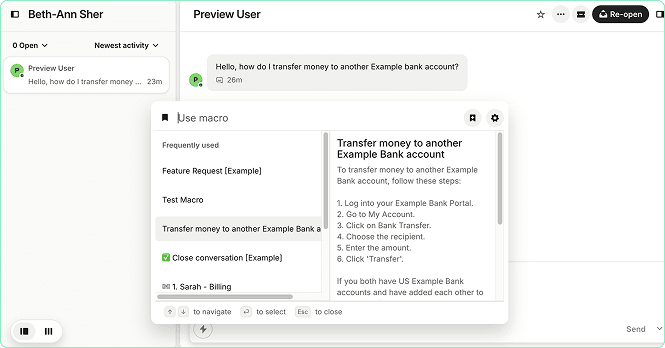
This happens effortlessly through Intercom Messenger, whether it’s on your company’s website, email, or mobile.
You can use saved replies or even AI to speed up responses. But more importantly, having access to customer details like past interactions and ratings helps you adjust the tone of the interaction and build stronger connections.
Collaborating with Others
Support isn’t a solo effort. Like any role, whether you’re leading a team or sharing findings across departments, collaboration is a necessity.
Agents often work in teams, assigning conversations to each other based on expertise or workload. With mentions, it’s easy to flag messages or keep others in the loop, making for smooth, aligned support.
Setting Up Automations
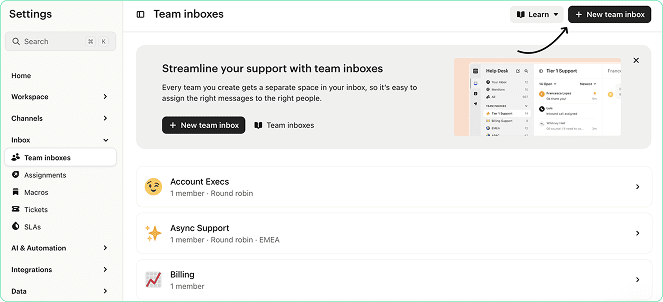
Support agents are also responsible for improving efficiency, with automation changing the game.
With well-designed automations, repetitive tasks are taken care of so you can focus on the important conversations.
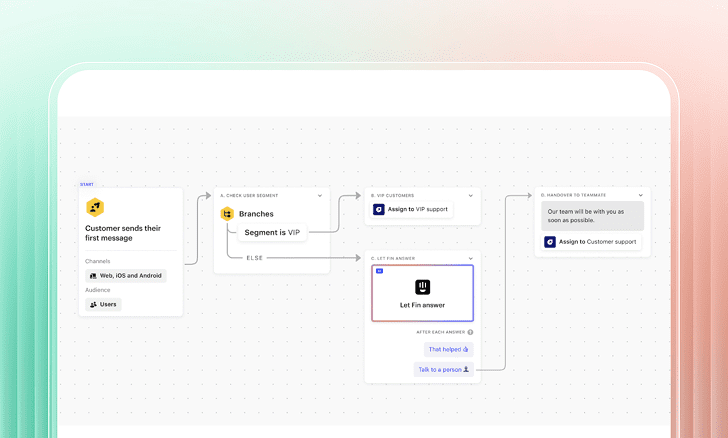
FIN AI automatically handles FAQs, while custom workflows route conversations, send targeted messages, or hand over for human support.
Improving Support
Staying proactive is hard but necessary for great support.
According to Coveo, 56% of customers rarely complain about a bad customer experience, they simply switch to competitors instead. This issue feels impossible to address (unless you already have the numbers).
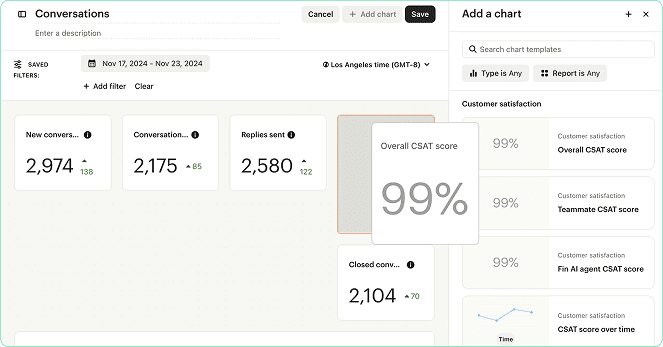
Intercom provides metrics like:
- Resolution rate
- Involvement rate
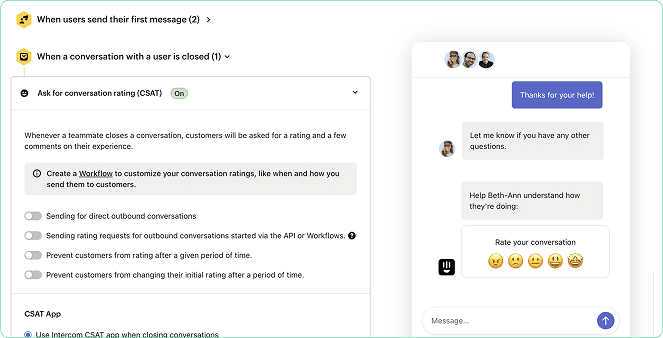
- CSAT (customer satisfaction)
- Abandoned rate and much more.
With access to these insights, you can identify what’s working and what needs to change. If certain patterns are recurring, you can flag it and collaborate with your manager or team to improve your support without losing direction. Just like how athletes use metrics to up their game, you too can use data to transform your support.
Best Practices for the Best Agents
These small habits make great support agents stand out from the rest:
- Time-blocking for checking tags and backlogs
- End-of-day reviews to monitor trends
- Leveraging AI and automation
- Providing proactive support
- Personalizing customer experiences
Conclusion
Contrary to popular belief, good support doesn’t come easy, especially in today’s fast-paced world. But with the right tools and workflows, any support team can transform into a high-performing, customer-driven powerhouse.
With Intercom, you streamline conversations so that the tickets keep moving, agents stay productive, and customers remain happy.
You’ve just seen what a smooth, efficient day looks like for a support team using Intercom. Now imagine that for your own team.
At Dtech Systems, we help businesses bring this vision to life by setting up and customizing Intercom to fit their exact needs.
From smart workflows to automation that actually works, we make sure your agents stay focused, productive, and ready to deliver standout support.
Whether you’re scaling or just starting out, we’ll guide you every step of the way.
Partner with Dtech to build a better day for your support team, and a better experience for your customers.