Dtech Insights
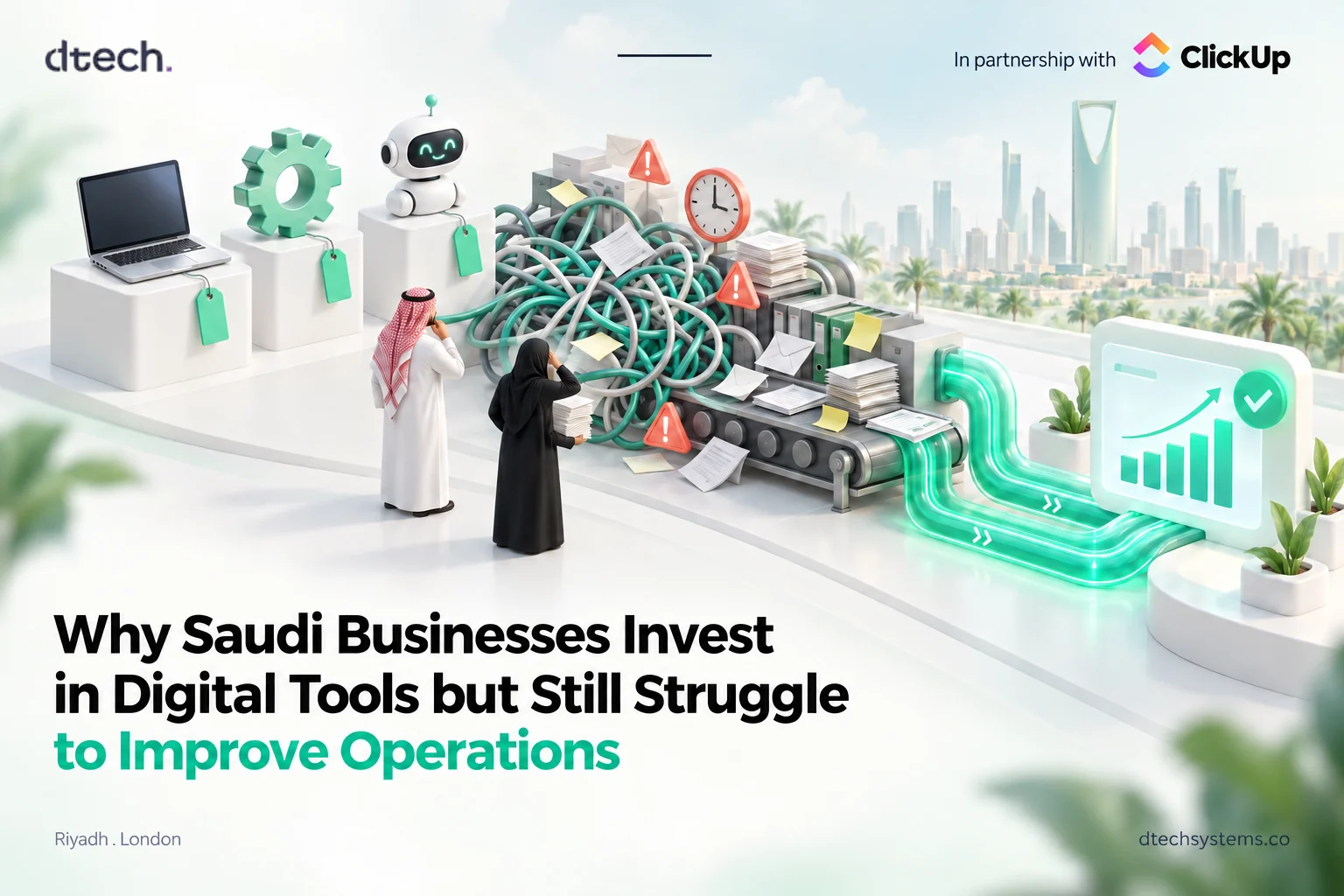
Digital Transformation Challenges: Why Saudi Businesses Buy the Tools but Still Struggle
The software is paid for. The AI pilot is live. Yet projects still slip, approvals still sit in inboxes, and teams still copy the same data into three places.
Saudi Arabia is moving fast on digital transformation, and Vision 2030 has made modernisation a board-level topic. Businesses are investing in project software, automation and AI. But the most common digital transformation challenges we see have little to do with the technology itself.
The real issue is how work flows between people, how systems connect, and whether employees actually use the tools in their daily routine. Fix those, and the software you already own starts paying back. Ignore them, and every new tool adds one more place to check.
5 digital transformation challenges that stop tools from working
Each of these shows up in companies of every size, from 15-person firms in Jeddah to government entities in Riyadh. Read them as a checklist. Most businesses recognise at least two.
1. New software, same old problems
Buying software does not fix an inefficient process. It just moves the process into a new screen.
A common example: a team adopts project management software, but approvals still happen over email and progress updates still live in a spreadsheet. The tool is there. The old habits are too.
- Employees repeat the same work across different tools.
- Approvals take longer than they should.
- Managers spend hours chasing updates.
The fix: Simplify the workflow first. Remove unnecessary steps and give every stage a clear owner before you introduce new technology.
2. Disconnected systems create more work
When project management, customer information and reporting tools do not talk to each other, people become the integration. They copy, paste, re-type and hope nothing gets lost on the way.
This is one of the costliest digital transformation challenges because the cost hides in small daily tasks that nobody adds up.
- Duplicate data entry
- Missing or outdated information
- Poor communication between departments
The fix: Connect systems where it is practical, and agree on one reliable place where teams find the latest version of important information.
3. Employees do not fully adopt new technology
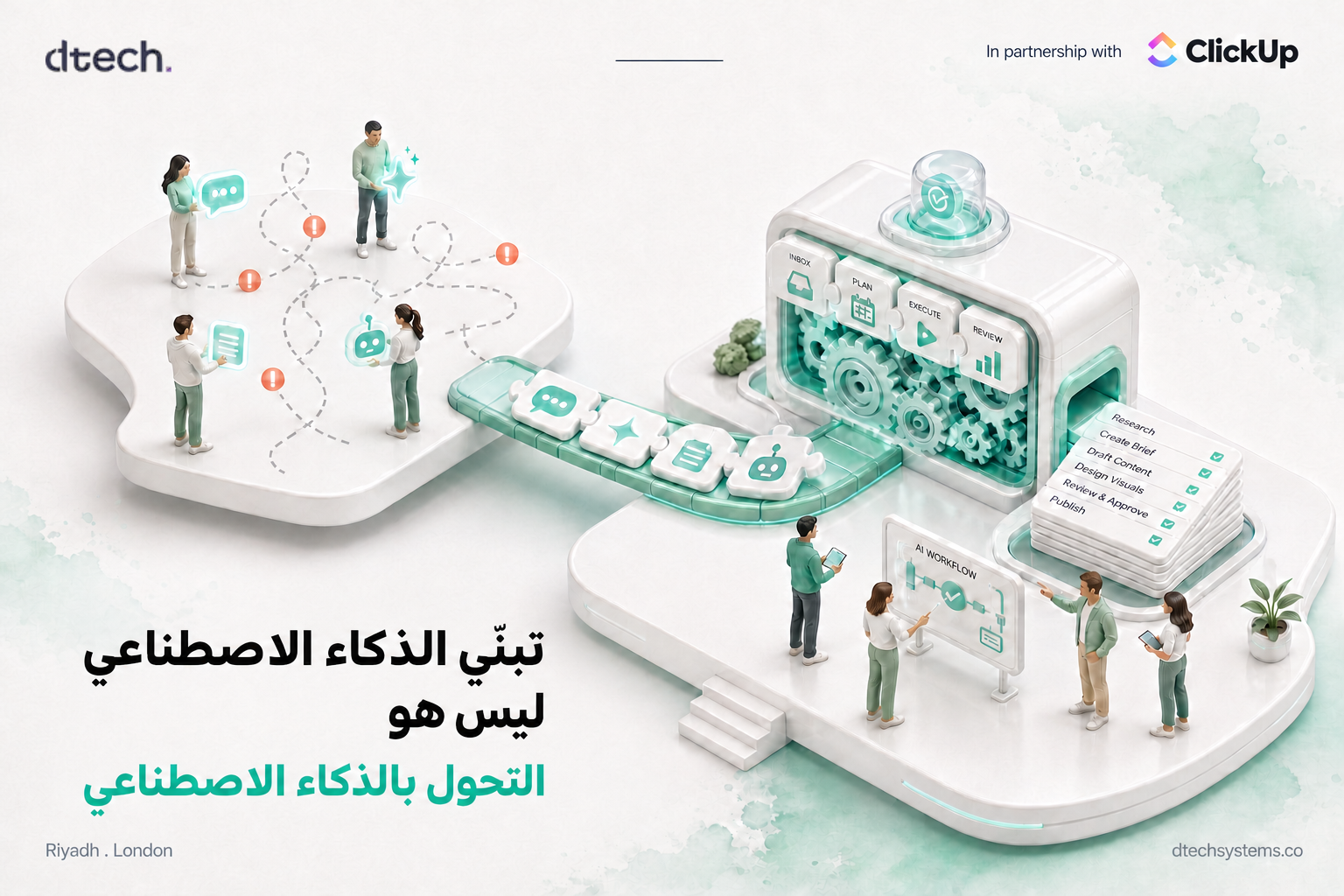
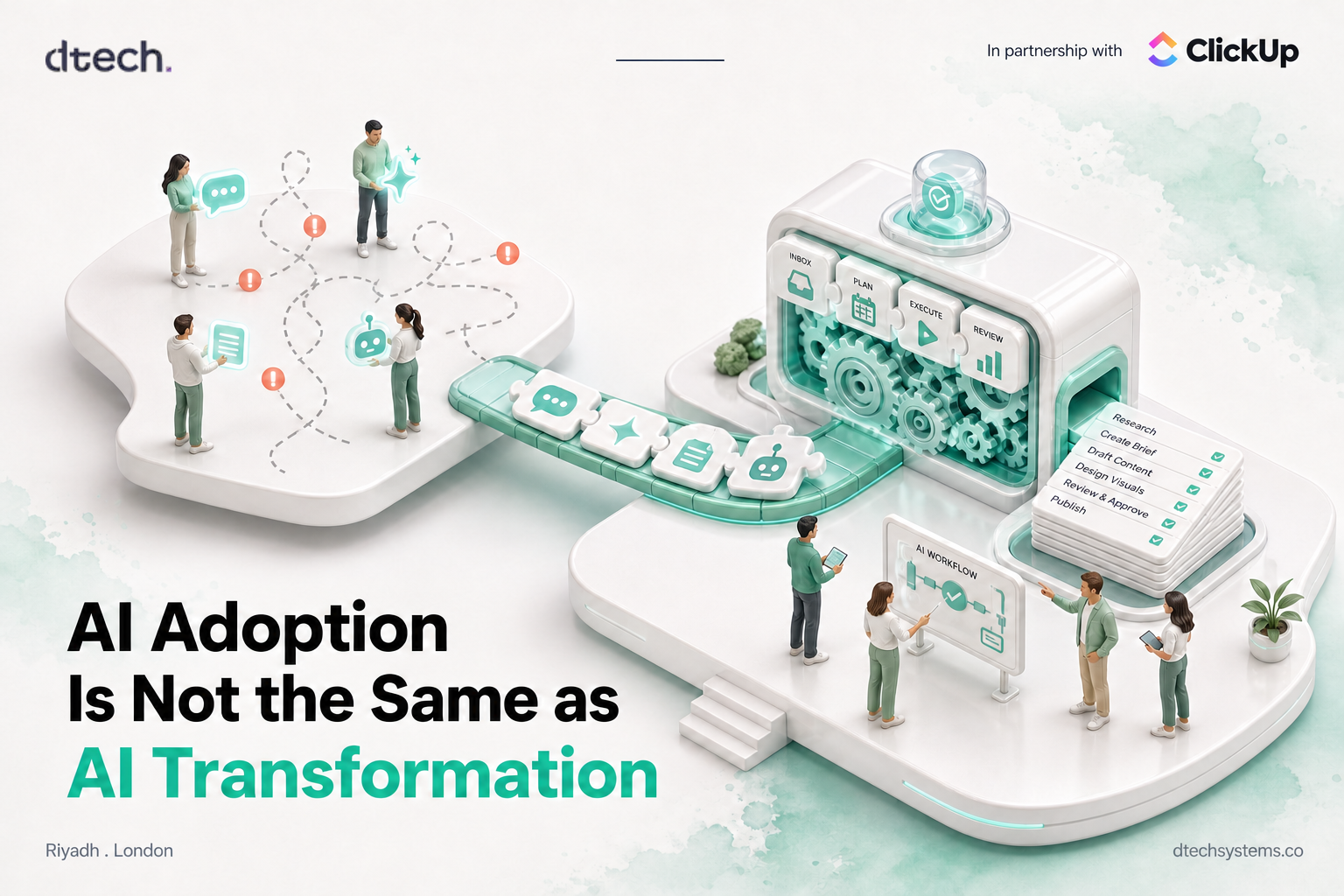
Even good software fails if people do not know how it fits their actual job. A generic demo on launch day is not enough. Within weeks, teams drift back to familiar spreadsheets, WhatsApp groups and email threads.
Software adoption is one of the most underestimated digital transformation challenges because it looks solved the day the licences go live. It is not. We cover this pattern in detail in why teams stop using ClickUp.
- Practical training built around each role
- Clear instructions for everyday tasks
- Ongoing support after go-live, not just before it
The result: Better adoption means you get the value you already paid for.
4. Managers cannot see what is happening
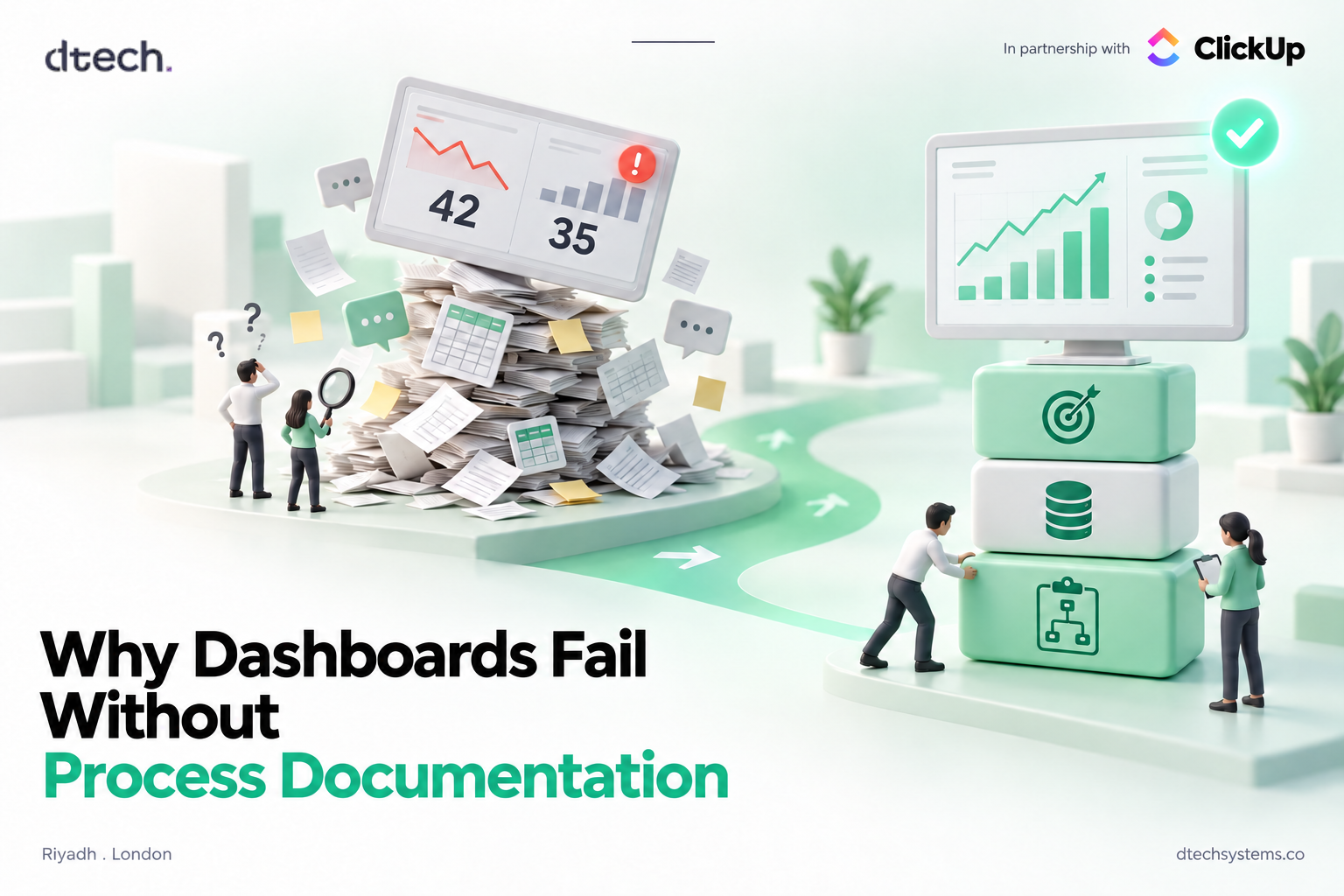
When updates are scattered across platforms, leaders find out about delays after the deadline, not before it. The weekly status meeting becomes the only moment anyone sees the full picture. Leaders usually feel these digital transformation challenges first, even if they cannot name the cause.
A useful project dashboard should show:
- Project progress and upcoming deadlines
- Overdue tasks and outstanding approvals
- Task ownership and team workload
Tools like ClickUp Dashboards can pull this together from live task data, but only if the work is actually tracked there.
The goal: Give managers the information they need to spot problems early and decide faster.
5. Automation and AI lack a clear purpose
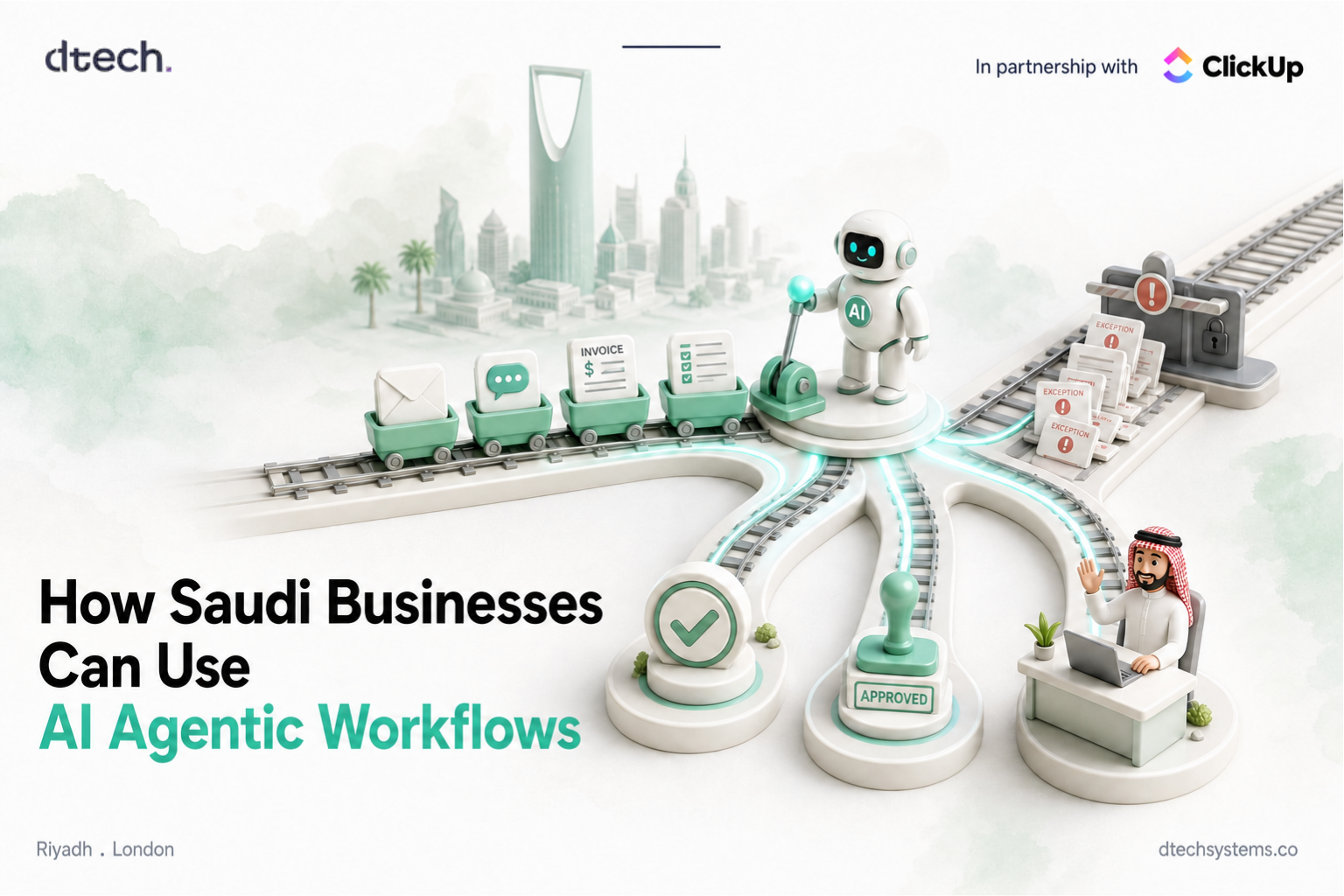
Business process automation and AI can save real time, but only when they solve a real problem. Automating a broken process just makes the same mistake happen faster.
Start with practical, high-volume opportunities:
- Automate routine reminders and task assignments.
- Use AI to summarise project updates or organise information.
- Reduce repetitive reporting and manual data entry.
If you are unsure where to begin, our guide to the best workflows to automate walks through how to pick candidates by volume, not ambition. ClickUp's own Automations handle most of these triggers without code.
The rule: Improve the process first. Then decide where automation or AI adds value.
Check your digital transformation challenges in 2 minutes
Tap every statement that sounds like your team today. Your result shows which of the five problems to fix first.
Tap the statements above that match your team. The fewer you tick, the healthier your setup.
How much time do disconnected tools cost your team?
Disconnected tools are among the easiest digital transformation challenges to put a number on. Use your own numbers. This is not an industry benchmark, just simple multiplication so you can see your hidden cost.
Formula: people × weekly hours × working weeks × recoverable share. With the defaults, that is about 9 full working weeks back every year (at 45 hours per week).
How to fix digital transformation challenges: 3 practical steps
You rarely need more software to improve operational efficiency. You need the tools you already have to work together. Start here:
- Identify the problem. Find where work gets delayed, where information gets lost, and where people repeat tasks. Our framework for finding operational waste is a good starting point.
- Improve the workflow. Remove unnecessary steps, clarify who owns what, and connect systems where it makes sense.
- Measure the results. Track time saved, fewer errors, faster delivery and real adoption, not just logins.
Most digital transformation challenges ease once these three steps become a habit. They turn digital transformation from a technology purchase into a visible improvement in daily operations. Once the basics are steady, adding practical ClickUp AI agents becomes far less risky.
Turn your digital investments into better results
Technology delivers value when the right tools support clear processes and well-trained teams. All three matter. Miss one, and the other two struggle.
At Dtech, we help businesses through ClickUp consulting and implementation, workflow design, dashboards, automation and role-based training. For teams in Saudi Arabia, we deliver in both Arabic and English, so workflows fit the way people actually work. If these digital transformation challenges sound familiar, a workspace audit is usually the fastest way to see what to fix first.
Digital transformation challenges: FAQ
What are the most common digital transformation challenges in Saudi Arabia?
The biggest ones are unchanged processes inside new tools, disconnected systems, low employee adoption, poor visibility for managers, and automation or AI without a clear purpose. Most are process and people issues, not technology issues.
Why do businesses still struggle after buying new software?
Because software copies whatever process you give it. If approvals, ownership and handoffs were unclear before, they stay unclear in the new tool. Fix the workflow first, then configure the software around it.
How can we improve software adoption across teams?
Train by role, not by feature. Show each team how the tool handles their own daily tasks, give simple written instructions, and keep support available for the first few months after launch.
Should we start with automation or AI?
Start with neither. Start with the process. Once a workflow is clear and stable, automate the repetitive, high-volume steps first, such as reminders and task assignments, then add AI for summaries and organising information.
How do we measure if operations are actually improving?
Track a few concrete numbers before and after: time spent on manual reporting, number of overdue tasks, approval turnaround time, and how many people use the system every week.